

Services

Physiotherapy Assessment
A physiotherapy assessment is an initial evaluation conducted by a physiotherapist to determine the patient’s condition and create a therapy plan.
What it includes:
- Patient consultation (medical history) – symptoms, medical history, injuries
- Inspection and palpation – visual and tactile examination of the body
- Measurement of mobility, strength, and posture
- Functional tests – assessment of how the body performs specific movements
In summary: A physiotherapy assessment is a professional evaluation of the musculoskeletal system to establish an accurate diagnosis and develop an individualized therapy plan.
Manual Therapy
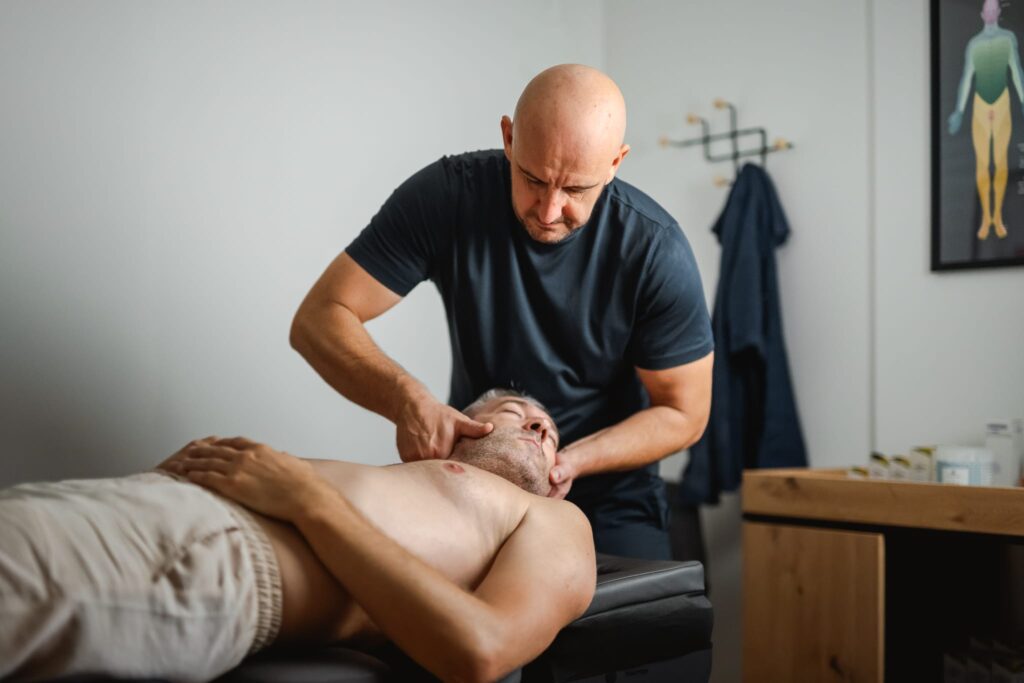
Manual therapy is a form of physical therapy in which the therapist uses their hands to manipulate, mobilize, and massage muscles, joints, and soft tissues with the aim of alleviating pain, improving mobility, and enhancing body function. It is used for problems with the spine, joints, muscles, and nerves.
It focuses on the diagnosis and treatment of problems in joints, muscles, and nerves.
- The therapist uses specific movements to mobilize joints and stretch soft tissues.
- The goal is to improve function and reduce pain.
- It is often used for chronic pain, stiffness, sports injuries, etc.
Medical Massage
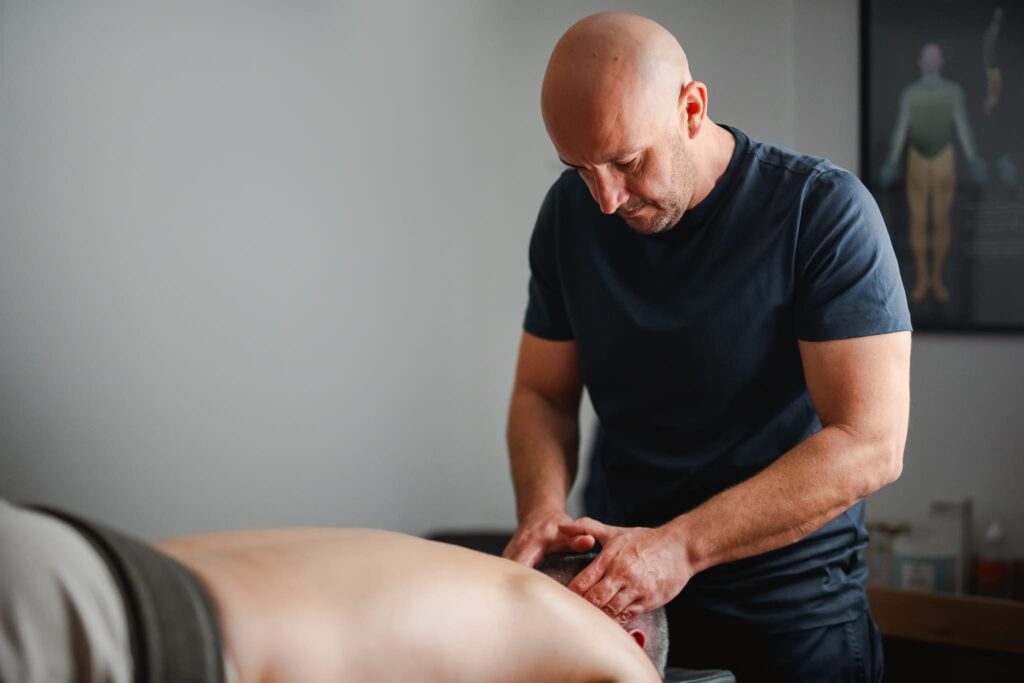
- Targeted massage used as part of therapy for specific health problems (e.g., back pain, sciatica, muscle tension).
- Focuses on specific body regions according to the diagnosis of a physician or physiotherapist.
- May include deep pressure and stretching techniques.
Goal: pain reduction, improved function, and recovery.
Sports Massage
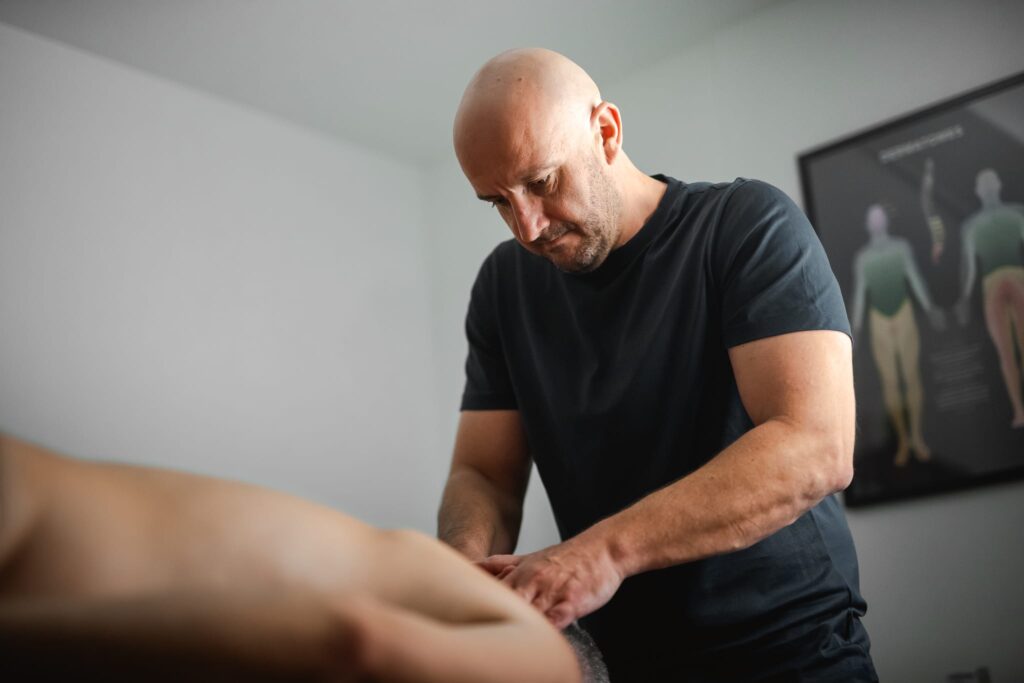
- Intended for athletes and physically active individuals.
- Can be performed before training (to prepare muscles) or after training (for recovery).
- Includes faster and deeper techniques, often combined with stretching.
Goal: injury prevention, muscle recovery, and performance enhancement.
Dry Needling
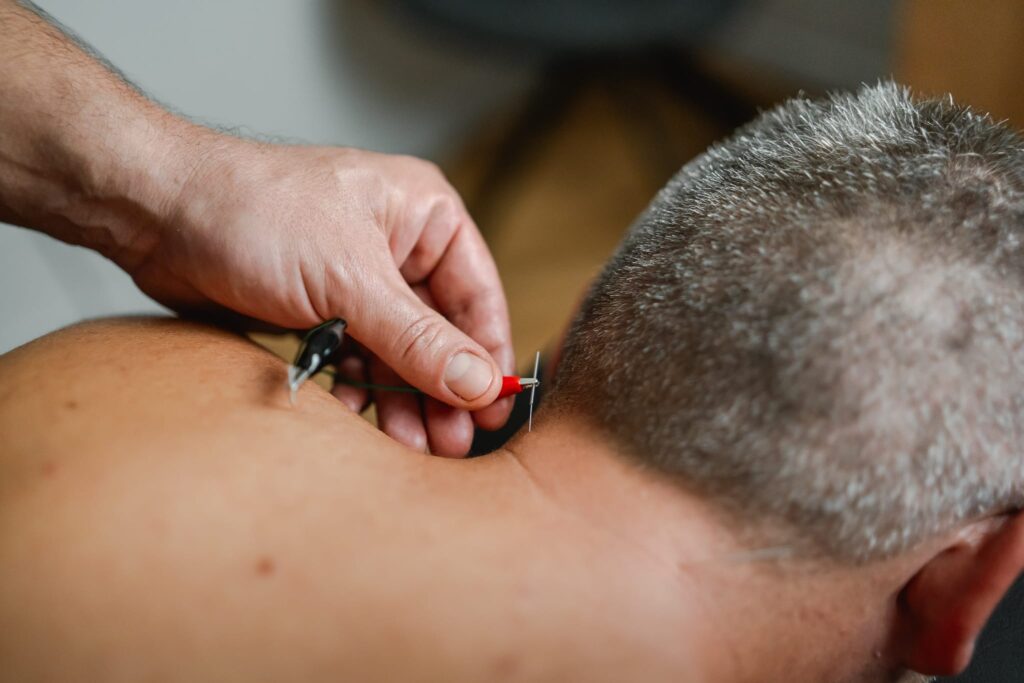
Dry needling is a therapeutic technique performed by physiotherapists and other healthcare professionals to treat pain and muscle dysfunction. It involves inserting thin, sterile needles (similar to acupuncture needles) directly into muscle knots or trigger points – areas where muscles are tense or cramped.
Goal of dry needling:
Muscle relaxation
Pain reduction
Improved mobility
Unlike acupuncture, which is based on traditional Chinese medicine, dry needling is based on Western medical science, anatomy, and neurophysiology.
In summary: Dry needling is a modern, scientifically based method for alleviating muscle pain using needles that specifically relax tense muscles.
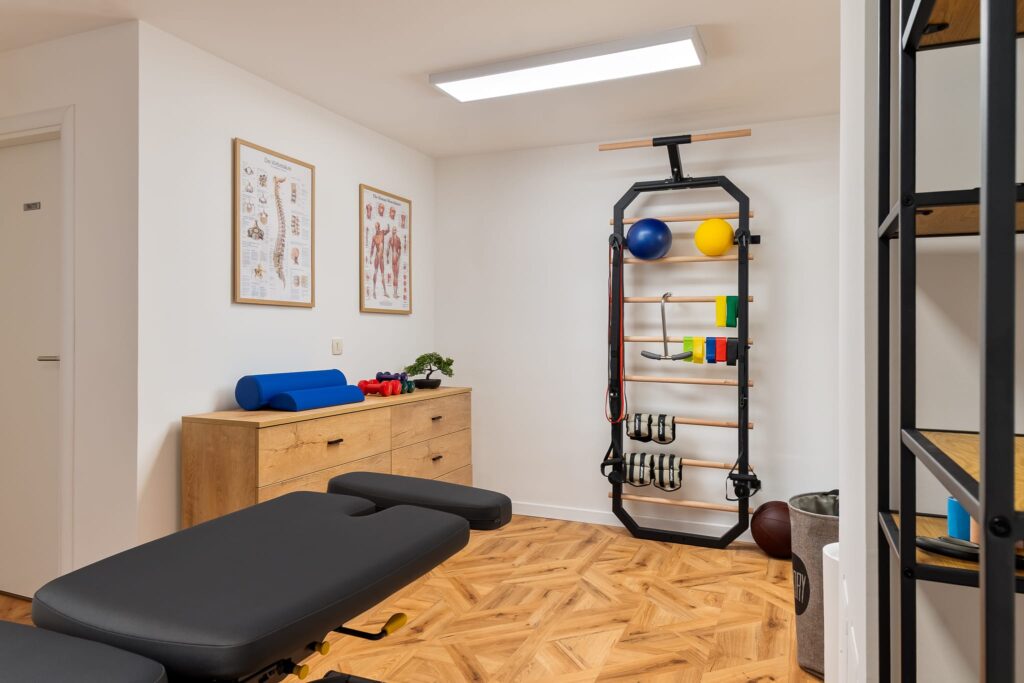
Physiotherapy Exercises
Physiotherapy exercises are specifically designed exercises performed or recommended by a physiotherapist for:
Improved mobility
Muscle strengthening
Pain reduction
Injury prevention
Rehabilitation after surgeries or injuries
Types of physiotherapy exercises:
Stretching exercises – to improve flexibility and relax muscles
Strength exercises – to strengthen weakened muscles
Balance and coordination exercises – especially important for the elderly or after injuries
Mobility exercises – to restore full range of motion in joints
In summary: Physiotherapy exercises are professional exercises that help the body recover, strengthen, and function better.

Kinesiotaping
Kinesiotaping is a therapeutic method that uses elastic tape (kinesio tape) applied to the skin to support muscles and joints without restricting movement.
Main goals of kinesiotaping:
Pain and inflammation reduction
Improved circulation and lymphatic drainage
Joint stabilization
Muscle relaxation or activation
The tape is waterproof, elastic, and can be worn for several days.
In summary: Kinesiotaping is a method of applying special tape to the skin to reduce pain, improve function, and support the recovery of muscles and joints.